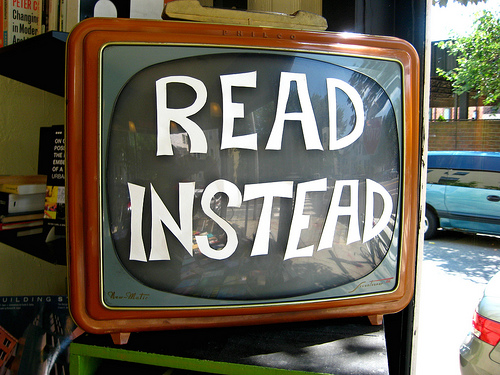
TV Trains You To Expect The Worst

I was watch­ing an episode of United States of Tara the other day when I had some­thing of a realisation.

In case you don't know the show, here's the back story. Tara is a woman with dis­so­cia­tive iden­tity dis­or­der (aka mul­ti­ple per­son­al­i­ties). For the sake of TV, they are 5 (or 6) very dis­tinct & end­lessly trou­ble mak­ing iden­ti­ties. A key part of the show, of course, is the actual woman her­self (played by the incred­i­bly tal­ented Toni Col­lette) try­ing des­per­ately to keep her life together despite the chaos sown by her sub personalities.

In the episode I watched, she'd been tak­ing her drugs reg­u­larly, & all her sub-identities had dis­ap­peared for sev­eral months. The fam­ily declared her life per­ma­nently changed, and every­thing was won­der­ful… for the first 15 min­utes of the 22 minute show.

I sat there through this won­der­ing why my entire body was tense. As far as every­thing on the screen, the fam­ily was get­ting on well, things were hum­ming along, and life was nor­mal.

So why was I stressed?

pic by james good

Then I realised. I was wait­ing for some­thing to go wrong. Which even­tu­ally, of course, it did.

Step­ping back from this par­tic­u­lar show, I realised a deeper (yet in hind­sight obvi­ous) truth: TV Drama thrives on.. well.. drama.

If some­thing isn't going wrong, there's no story.

Step­ping back again, this applies to com­edy, hor­ror, thriller, real­ity TV… in fact, every genre other than edu­ca­tional or doc­u­men­tary TV.

Why? Because drama of some form is a crit­i­cal part of telling a story, any story.

If the hero/protagonist doesn't have some­thing to over­come, how can they prove they are (or become) a hero?

Jack Bauer of 24 is the per­fect (& thus oft car­i­ca­tured) exam­ple of this, of course.

In other words, some­thing must nec­es­sar­ily always go wrong. No mat­ter how great things seem, some­thing bad is always about to happen.

pic by rock creek

The real issue here is this. Time watch­ing TV is, in a very real sense, time spent train­ing our brains to oper­ate in a cer­tain way.

For exam­ple, we take it for granted, but when mul­ti­ple cam­era TV first appeared, peo­ple had to retrain their brains to under­stand that shots from dif­fer­ent angles were all telling the same story, & how to piece it all together into one lin­ear nar­ra­tive. See­ing things from mul­ti­ple angles at once isn't some­thing that hap­pens to our brains nor­mally (let alone fades, swipes, crab­bing, zooms, etc).

Why is this sud­denly all so clear to me? Because I have been won­der­ing recently why my entire life I've always been expect­ing things to go wrong.

Thanks TV!

At this point, I am unde­cided about movies — their one-off nature & longer run­ning times have more oppor­tu­nity for  flex­i­bil­ity & depth in story telling (eg, start­ing with some­thing bad hav­ing already hap­pened & climb­ing out of it from there — eg Ship­ping News), but I think it's safe to say my days of watch­ing a lot of TV are over (except maybe Doc­tor Who, heh).

  • http://rawfoodswitch.com Nathalie Lussier

    Ooh this is such a great real­iza­tion! I think I've def­i­nitely been pro­grammed… I watched far too much tele­vi­sion as a teen. I think we need to go out there and "be alive" to real­ize that good things hap­pen, it's not all drama.

    I've cut way down on my TV watch­ing (the perk of not hav­ing a TV!) but movies still get me some­times. I find really dramatic/strong movies like the new Bat­man movies really leave me feel­ing tense. Though that might just be the genre. ;)

  • Jack M.

    Of course, most books should be out as well — they're not very enter­tain­ing if the char­ac­ters aren't going through their hero-arc… :)

    Tens­ing your body doesn' thave to be a bad thing though, as long as you also ease the ten­sion at the end — per­haps that's why movies are bet­ter than TV, since the tv series will try to draw you into the next epsode, often with cliffhang­ers, while movies tend to end (and have the pre­req­ui­site happy end­ing usually).

    The other good thing about get­ting rid of your TV is the amaz­ing amount of free time you sud­denly get back, as I'm sure you can tes­tify to as well.

    On a slightly related note, I have one game on my iPod Touch that I play occa­sion­ally, one of those "throw the rag­gdoll over the cliff and inflict max­i­mum dam­age" type of games (it's called "Max­In­jury"). I've noticed that I just can't stay relaxed while its lit­tle body is falling, hit­ting var­i­ous obsta­cles along the way. My phys­i­cal body only relaxes (and noti­ci­bly so!) when the game's vir­tual body comes to a stand­still again. I haven't fig­ured out why that game is so inten­sive… would you care to down­load the free ver­sion and report your find­ings to me? It's an amaz­ing real­i­sa­tion, the sheer amount it affects your body.

    — Jack M.

  • http://www.ihatemymessageboard.com/ Tracy O'Connor

    Hmmm, this does explain my love of absurd sit­u­a­tions and unlikely coincidences.

    I think TV gives us unre­al­is­tic expec­ta­tions of lots of things, really, not just bad things that can hap­pen. For awhile, after we bought our first home I was watch­ing a lot of a chan­nel we have in the States called HGTV (home and gar­den tv) to get ideas.

    Well it turns out that it made me quite anx­ious that we were the only peo­ple in Amer­ica who couldn't afford and all gran­ite and stain­less kitchen and had only 2500 square feet for 6–7 peo­ple and no jacuzzis. None! Heh, I exag­ger­ate a lit­tle but it was jar­ring when I real­ized how out of touch with the real­ity that I saw every day I was and how I was con­stantly upgrad­ing my wish­lists based on what I was now see­ing as "nor­mal" and there­fore "should haves" for aver­age mid­dle class fam­i­lies like our own.

    I do love a good drama or thriller, but mod­er­a­tion is the key.

    Side note: I've found that cer­tain peo­ple I've met also have give me the same sort of on edge, shoe ready to drop feel­ing. Now, I've no idea why they are so doom and gloom about every­thing but I know I feel much bet­ter if I limit my con­tact with them.

  • http://sidawson.org Si Daw­son

    Oh yeah, par­tic­u­larly TV in the states (where every­one is bet­ter dressed, bet­ter look­ing, richer & has a bet­ter vocab­u­lary than you.. no mat­ter WHO you are). Unre­al­is­tic expec­ta­tions is a whole other post :)

    Yep, def­i­nitely a smart move to limit time around cer­tain types of peo­ple — no mat­ter how well shielded you are, it's almost inevitable they will affect you & how you are/behave/feel.

    ps. you don't have two jacuzzis? The shame!

  • http://sidawson.org Si Daw­son

    I think thrillers are specif­i­cally designed to raise ten­sion — in order to off­set the relief felt when the chal­lenge is overcome.

    I think there's another thing — how often does one watch movies, vs watch­ing TV? you can hap­pily watch TV every day of the week.. but movies tend to be a rarer thing, because of the time requirement/hassle. So that by itself works in their favour.

    Of course, there are also a ton of movies that just shame­lessly rip the stan­dard TV for­mat too — so no ben­e­fit there.

    & yeah, I'm specif­i­cally think­ing in terms of — how have I been mak­ing my life more dif­fi­cult, with this belief? (bash­ing my head against a wall again, see). All pos­i­tive lit­tle steps in the right direction.

  • tatjna

    Basic pat­tern of sto­ry­telling — back­ground –> cri­sis –> resolution.

    Pretty much every story does this, includ­ing movies and nov­els — they just take longer than TV.

    I think on TV it's more notice­able, espe­cially within series, because it hap­pens over and over again. Soaps are the worst, they have mul­ti­ple crises at once, and there's never a point where all of them are resolved at the same time and view­ers get to relax.

    And yet peo­ple enjoy it.

  • http://sidawson.org Si Daw­son

    I think books are a lit­tle more sub­tle — because it's very much you, your mind that is cre­at­ing the story. You're not hav­ing 30 frames a sec­ond of multi megs of infor­ma­tion, plus music, all pumped into your brain for extended peri­ods of time. It's much eas­ier to avoid things that aren't nec­es­sar­ily ben­e­fi­cial (skip a para of gore, etc)

    & yeah, I hear you re free time.. although oddly, the inter­net seems to soak up a lot. What's with that, exactly?

    No, as delight­ful as down­load­ing an iphone based self-torture device sounds? I'm really not that keen to. Thanks for the offer though! *laugh*

    Sounds to me like sim­ple empa­thy — you anthro­po­mor­phize & asso­ciate with the char­ac­ter on the screen (same as FPSs, & RPGs, right?) so then, in a weird but real way, you feel the pain they would be expe­ri­enc­ing. But yeah, the impact of these things is scar­ily dis­pro­por­tion­ate at times, no ques­tion about that. Hence my think­ing deeply about how much I'm asso­ci­at­ing with TV. I know I'm heav­ily affected by the things in my imme­di­ate environment.

  • http://sidawson.org Si Daw­son

    Yep, you're exactly right.

    I think a huge part of the enjoy­ment comes down to escapism (like so many things). It's a way to avoid an unpleas­ant feel­ing in one's life — rather than, say, wel­com­ing up that feel­ing, heal­ing it & thus remov­ing it permanently.

    I know for me that's been a HUGE life pat­tern, that I'm only recently start­ing to seri­ously shift.

    But yeah, soap operas. Oh man. I had a friend once who pointed out that you could time 20 sec­onds MAX between some­one on Eas­t­en­ders etc get­ting upset, shout­ing or cry­ing. Watch­ing it with that in mind it's dis­turb­ing just how accu­rate that is.

  • http://www.ihatemymessageboard.com/ Tracy O'Connor

    You know, I was hon­estly sur­prised when I lived in Dublin how nor­malm
    a lot of the actors on tv looked. Granted they were still very
    attrac­tive peo­ple but not at all as per­fect as on Amer­i­can shows. The
    inte­ri­ors of places on tv looked more like reg­u­lar homes, too. It was
    a bit jar­ring to be hon­est but I perservered and grew to love
    Eas­t­en­ders. ;)

    It's scary to me as a par­ent how all of this anx­i­ety plays out in how
    we raise or chil­dren. Not just what they are watch­ing but how it seems
    they are grow­ing up in a world where par­ents are taught to be fear­ful
    of out­siders and other adults are wary of inter­act­ing with chil­dren
    for fear of accusations.

    I guess peo­ple do respond very strongly to sto­ries cen­tered on dan­ger
    and fear. Obvi­ously it's in our best inter­ests to learn what should be
    avoided so I can see why it's a very effec­tive story telling
    tech­nique, mar­ket­ing tool, etc. but when it's so mag­ni­fied and so
    con­stant it becomes incred­i­bly lim­it­ing and rein­forces a lot of
    neg­a­tive ideas.

  • http://www.examiner.com/x-10560-Special-Needs-Kids-Examiner Heather E. Sedlock

    I banned tele­vi­sion for awhile when my son was going over his sched­ule (to pick a time for home­work and a "play date" for a pal to come over) and he went accord­ing to what SHOWS were on when. He didn't want to miss the shows. I didn't allow TV for home­work time (music with no words is okay), and he was wor­ried his pal wouldn't want to watch the same show… I real­ize just how impor­tant TV had become to him and it was time to make a change.

    I was sur­prised recently how many chil­dren, from as young as a year old, have a tele­vi­sion set in their bed­rooms in Amer­ica. 72%. I wish I still had that link because they had sim­i­lar things to say about TV train­ing or "rais­ing" chil­dren and the neg­a­tive effects. The sense of wait­ing for the shoe to drop was men­tioned. You're on to some­thing, Si ;)

  • http://sidawson.org Si Daw­son

    Yep, that sched­ul­ing thing is def­i­nitely an eye opener.

    See, I've known for a while that "TV is bad" — blah blah.. but it's the details. WHY. & not some lame assed study that barely applies.

    Now, the escapism thing I fig­ured (using it to avoid life) — but that's not really about TV, you can escape tons of dif­fer­ent ways. That's about what you're escap­ing from.

    This though, well, this is the first time I've had a spe­cific real­i­sa­tion (other than, duh, it wastes time) about TV in par­tic­u­lar, not just escap­ing etc in general.

    & yeah, TV in children's bed­rooms = scary.

  • http://www.examiner.com/x-10560-Special-Needs-Kids-Examiner Heather E. Sedlock

    I tried to find the link to the lame assed study but still can't find it. It did have some salient points to make but I think this is bet­ter for you because you were able to attribute a neg­a­tive effect to your per­sonal self and lifestyle. We (humans) always tend to accept things when we see how it relates to us. The "What's in it for me" effect of learning :)

  • http://sidawson.org Si Daw­son

    Oh man, I just read today how some 14 year old kid helped a 3 yr old find his mother, then ended up get­ting arrested for it. Ridiculous.

    Fear in gen­eral. It's so bull­shit. Who wants to live in a world like that?

blog comments powered by Disqus