These Are Not Your Stories

I was at a shaman workshop last weekend, and the concept of “the stories of our life” came up.

This makes a lot more sense than merely the singular “story of our life.”

Our lives are a multitude of layers, thousands of experiences, all layered upon each other, all combining together to make the gloriousness that is us!
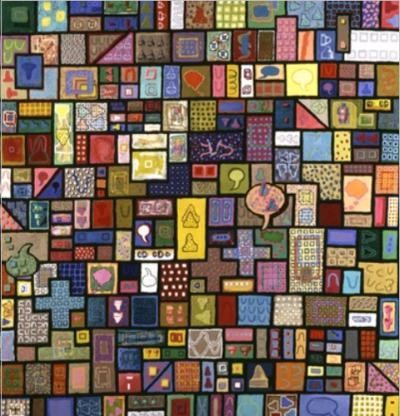
patchwork_lives.jpg

So, first thing to do is recognise these stories for what they are. How do we find them? Easy, just switch off your thinking brain, & start writing!

Eg, for me, they’d go something like:

  • I was born in Australa (that’s a story)
  • We moved around a lot when I was a kid (another story)
  • I grew up in a lower-middle class family

and so on..

The critical thing here is this – when we think about identity, ourselves, who we are, it’s these stories that define us. These are the things that we tell ourselves over & over each day, in the back of our minds.

And that’s exactly the problem.

The more we tell ourselves these stories, the more they define us.

You get in a troubled relationship, make the mistake of extrapolating a bit too much, & start telling yourself “I always fall for the wrong guy/gal”, and hey presto, you’re going to start doing that in your life. These are self fulfilling prophecies.

Imagine having a guy who followed you around all day, whispering in your ear “you suck!” or “you’re a failure!”. How long do you think before your life really did start sucking? (or, perhaps a better move, you punched him out).

The problem is, this is exactly what our mind is doing to us. It’s why shamans deliberately let go of their stories as part of their training. Why buddhists learn to detach themselves from their egos. It’s all the same thing.

Now, that’s a pretty big goal, so what’s a good first step?

Well, how about realising that a whole bunch of these stories aren’t even ours?

90% of what happened before I left home? Those aren’t my stories.

Anything I didn’t directly choose, or was just something I was told? Those aren’t my stories.

I didn’t choose to move around as a child. I didn’t choose where to live, how much money the family had, & so on. These were my parents’ decisions. Sure, they affected me at the time, but they’re only my stories if I choose to make them so. They only continue to affect me if I choose to make them part of the collection of stories I tell myself.

Even just changing the focus can help enormously. “I’m from a lower-middle class family” to “I had lower-middle class parents” or “My parents were lower-middle class.” At each step removed it’s less & less self-defining, so the story has less power. If you want to keep it at all.

Ditto with relationships. How many relationships have you been in where this person, that you chose, respected & loved has told you something terrible about yourself? You’re a terrible lover, useless in business, embarrassing to be seen with, and so on.

Why are you choosing to continue telling yourself that story? (“I’m embarrassing to be seen with”). It’s not your story, it’s just their opinion, their story.

We have the choice, we always have the choice not to continue telling ourselves these stories.

Realising that we have these stories is an important first step.
Identifying which ones we can let go of is enormously empowering.
An easy first step is to chuck out all the ones we have that were never ours to begin with.
When we can finally release them all, then we’re well on the way to being truly free to live.


  • I am sure you are already aware but Eckhart San would agree with you whole heartedly ...

    "...sometimes letting go is an act of far greater power than defending or hanging on."
    Our Main Main Mr Tolle
  • Oh yeah, totally. Well, the whole tapping/healing thing, it's all about letting go, really.

    Went to see Mr Tolle the other day. Expensive but totally worth it. He's surprisingly funny actually. Kinda like an enlightened stand up comic :)
  • Thank you as always for your wisdom and loving spirit!

    Thanks also for the practical tips - a conscious writing stream sounds like a great way to recount our stories. I am all about the Capricorn check lists, maybe creating a checklist of stories to let go of would really work for me. Arigatou !
  • Ok, I'll bite - Capricorn checklists, what are they?
  • Thank you for this Si - it's something I need to really remember. Taking on board someone else's story just weighs you down and prevents you from being the best you possible. I feel very empowered after readingyour words!
  • Claire
    you know, thats a really wonderful way to lead life. I feel that stories at the same time are important though: they give us a sense of ourselves, and we can better understand ourselves through our stories. Knowing you didn't choose something doesn't mean it didn't effect you. I think it's important to embrace ALL stories, of yourself, your past and your surroundings and use those knowledges to the fullest: not to define but to use as a tool to know what work, doesnt work, what makes you happy and what doesnt, and learn from everyones stories how to live the best possible life by absorbing them as knowledge.
  • In that last sentence, right there.

    Definitely learn from these stories, gain the wisdom. Once you have though? Then you're free to let go of them. You won't forget them, but you also don't need to clutch them to you any more.

    It's part of the process of gently dismantling the ego. A big goal, I admit, but worth it.
  • I've tried to follow through with this idea and have to a great extent been successful at it but the amazing thing to me is all the other people in your life try to define you by their stories of you and memories too! And I can't control their thoughts! Great read. Thanks!
  • exactly. That's exactly what happens, you're so right.

    The important thing is to notice them for what they are - see which are yours, which aren't, and which stories you want to keep telling yourself.... which it sounds like you're doing fantastically. Great stuff!
  • I disagree somewhat. I think that the stories, because we do let them define us, in a very human trait of self-definition, are what make us stronger. It is true, like you say, that we have to acknowledge that we have these stories, but personally, I think the more important thing is not letting them go to live, but realizing that we are strong because of or in spite of them. Correct me if I'm wrong; I don't think you are saying we should let go of all our stories, just the ones that are negative. But even the negative ones bring character to us as individuals.

    After all, how can you "be free to live" something if you let go of your entire past and identity, whether or not that identity is something you create "by yourself" (impossible because we are always influenced by others) or something you allow the world to create with you?
  • Once you've learned the lesson, gained the wisdom, then you have the freedom to let go of the story.

    The important first step is to identify which stories you want to keep, and which not - and that many, many of what we think are 'our stories' aren't ours, & never were.

    Of course, all this is personal choice. Many (most?) people love their stories. Refuse to let go of them, & are happy like that. That's ok too.
  • I found your site via Gala Darling's site, "Icing", and while I enjoy your stuff, I very much disagree with this particular article. It seems as though, if it were up to you, the only stories of ours that matter are the times where we chose for ourselves. That would exclude all the bad things that ever happened to us – and yet what’s important ABOUT those stories is how we came out of them. What defines us as people is what we did about those stories, even way after the fact. Igonoring the bad isn’t “empowering”, it’s delusional. And it robs us of the power we developed from lessons learned.
  • Hi Teresa, thanks for the comment, & thought you've given this.

    What's important is discrimination. Seeing the stories for what they are. Learning what needs to be learned, and then letting go. Also, understanding that many things we tell ourselves aren't really anything to do with us.

    I'm definitely not saying don't learn from things that happen, not at all. The important thing is not to keep beating ourselves up, & particularly not beating ourselves up over someone else's lessons.
  • joy
    this is great simon, definitely something i intend to reflect on. thank you! (:
  • i liked this :)
  • mhairi
    Thanks for this.

    It's something I need to remember more often.
  • georgia
    So glad you're back, and with a bang!
    Thanks Si, for a great post.... definately food for thought :)
  • Ha ha, thanks Georgia!
blog comments powered by Disqus